

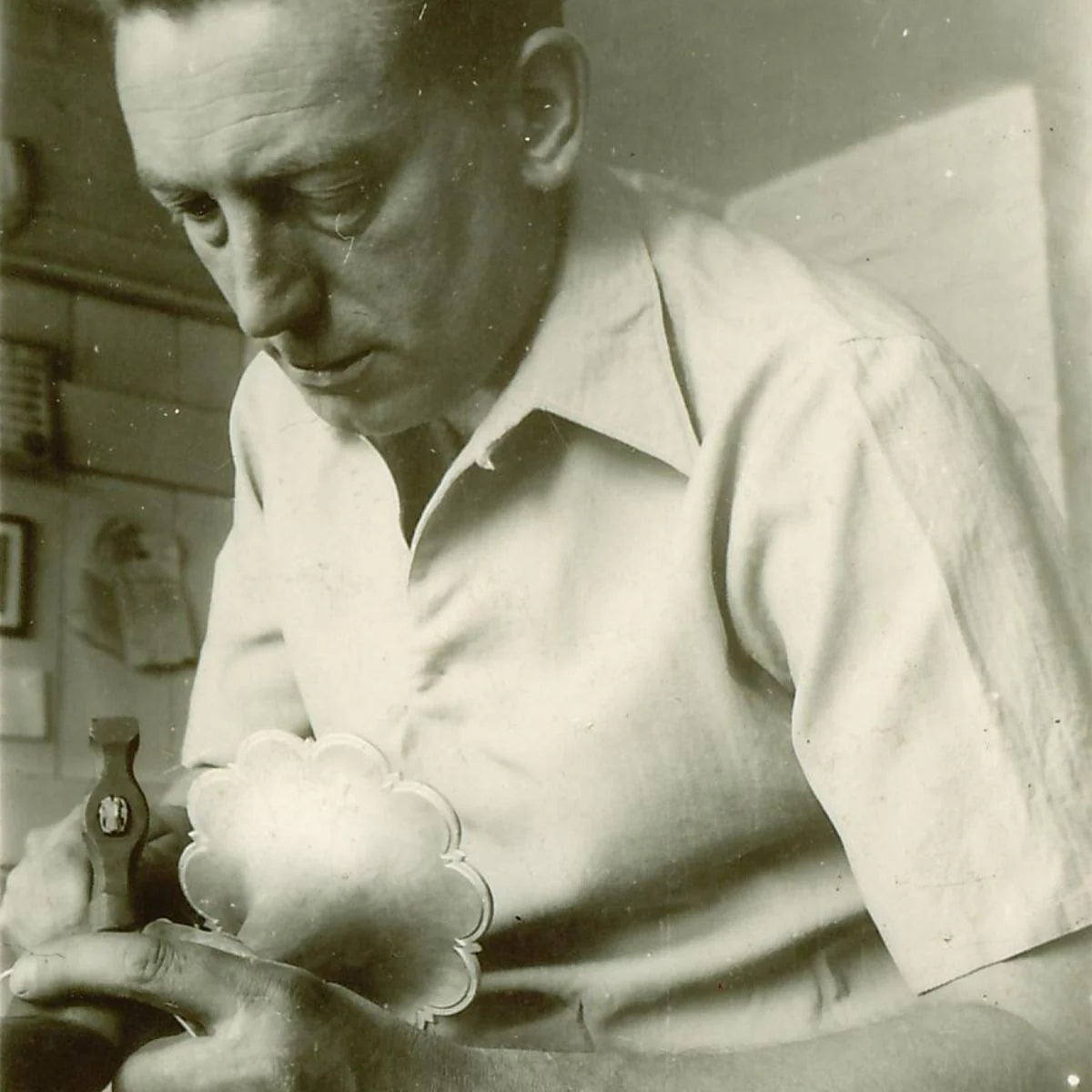
1920 · The beginnings
The Central School of Arts & Crafts
Dunstan chose the Central School of Arts & Crafts over the Royal College of Art, then learned the trade as assistant to a London goldsmith.

Our heritage · 1920 — today
Over a century of silver and gold — from Dunstan Pruden’s first commission to our Ditchling workshop today.
Begin the storyPrologue
From Dunstan Pruden’s training in the 1920s to Anton and Rebecca founding Pruden & Smith in 1988 — a craft handed down, and still practised at the bench in Ditchling every day.
1923
Dunstan’s first great commission, for Exeter College, Oxford
30+ years
teaching silversmithing in Brighton
1988
Pruden & Smith founded by Anton and Rebecca, in Ditchling
Goldsmith, author and teacher — and the reason our story begins in Ditchling.
1920 · The beginnings
Dunstan chose the Central School of Arts & Crafts over the Royal College of Art, then learned the trade as assistant to a London goldsmith.

1923 · A significant commission
Commissioned by the Rector, the altar cross earned Dunstan £250 — and his name as a master goldsmith.
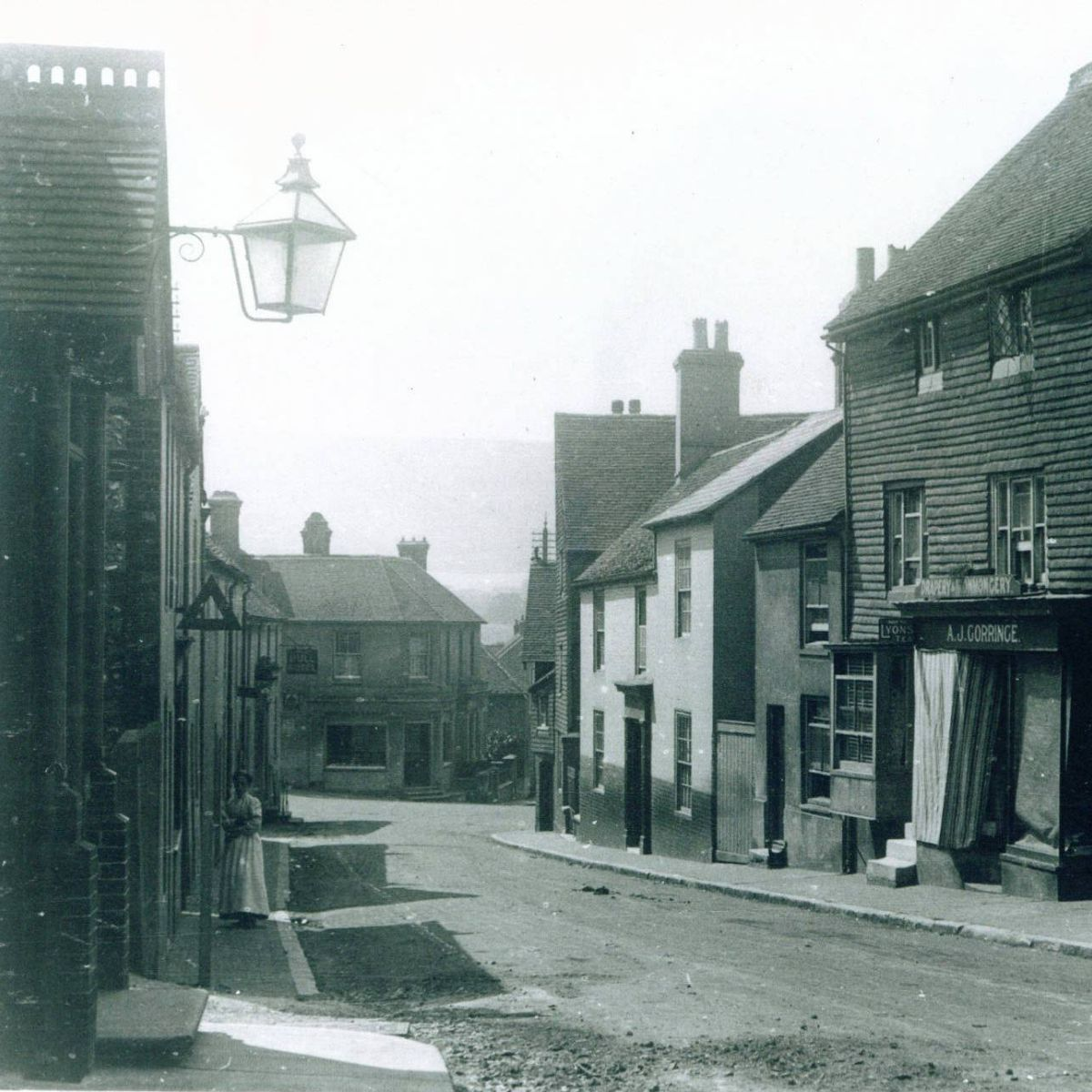
1932 · Relocation
Dunstan joined the Guild of St Joseph and St Dominic. A year later, St Dominic’s Press — later the Ditchling Press — published his book, Silversmithing.

1934 · Educational leadership
At Brighton School of Art he trained Gerald Benney RDI, Michael Murray and Anthony Elson, and pioneered figurative work made directly in silver.
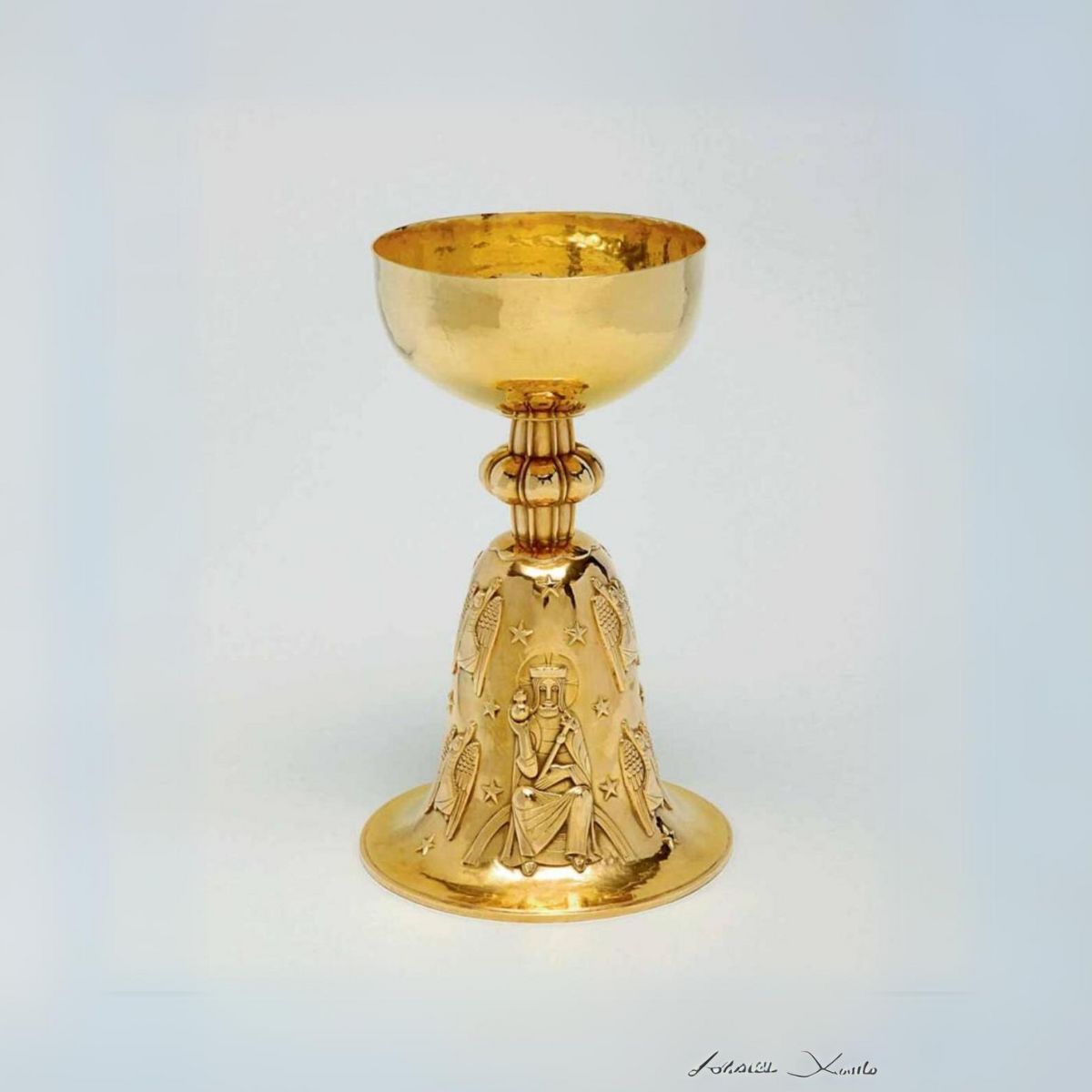
1959 · Career highlight
Made for the Metropolitan Cathedral in Liverpool — the high point of a remarkable career.
A silversmith and a fine artist. Their paths crossed in the workshop — and in 1988, Pruden & Smith began.
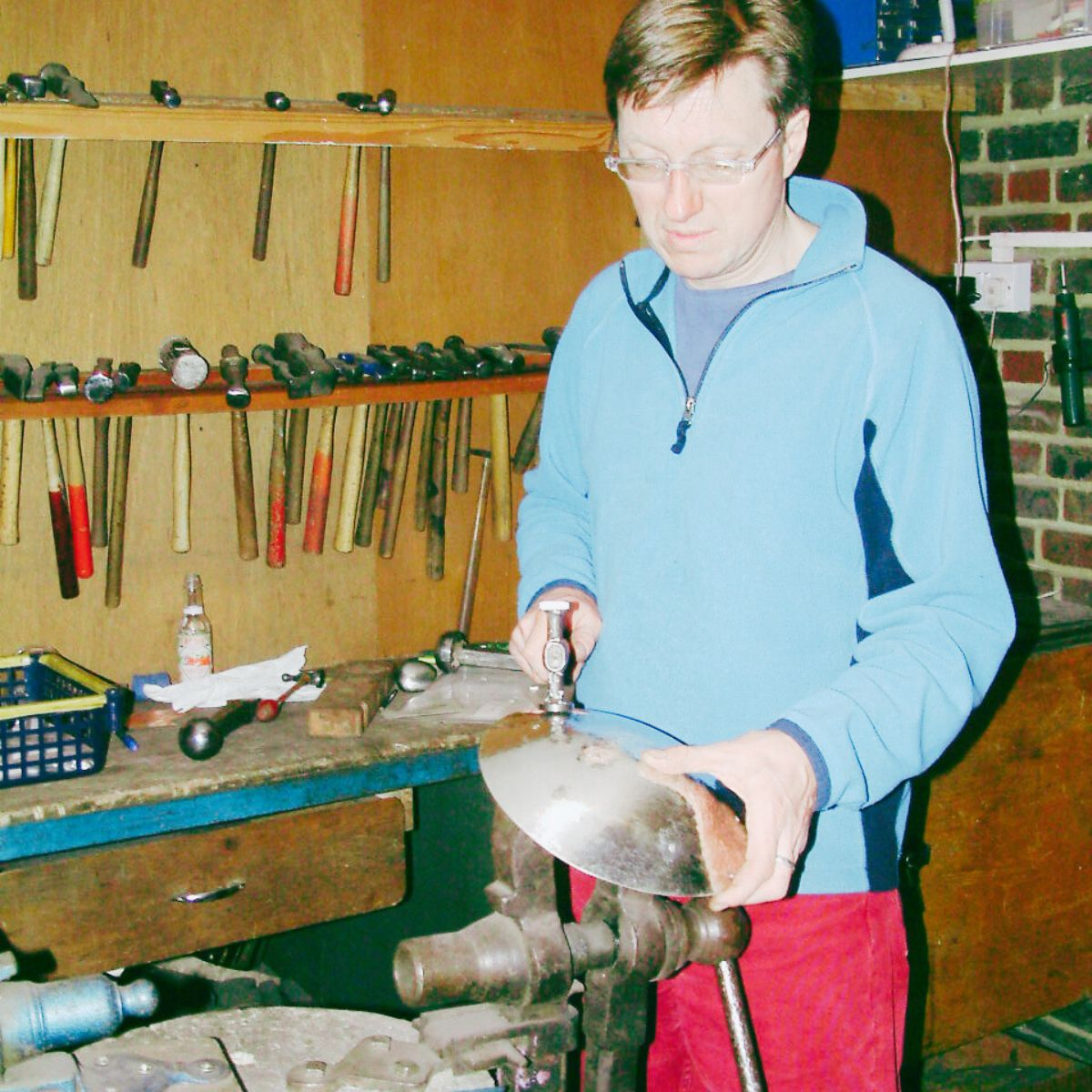
1975 · Inspiration & training
Inspired by Dunstan, Anton trained as a silversmith in Gloucestershire under Angela and Philip Lowery, while Rebecca Smith studied fine art at Farnham.
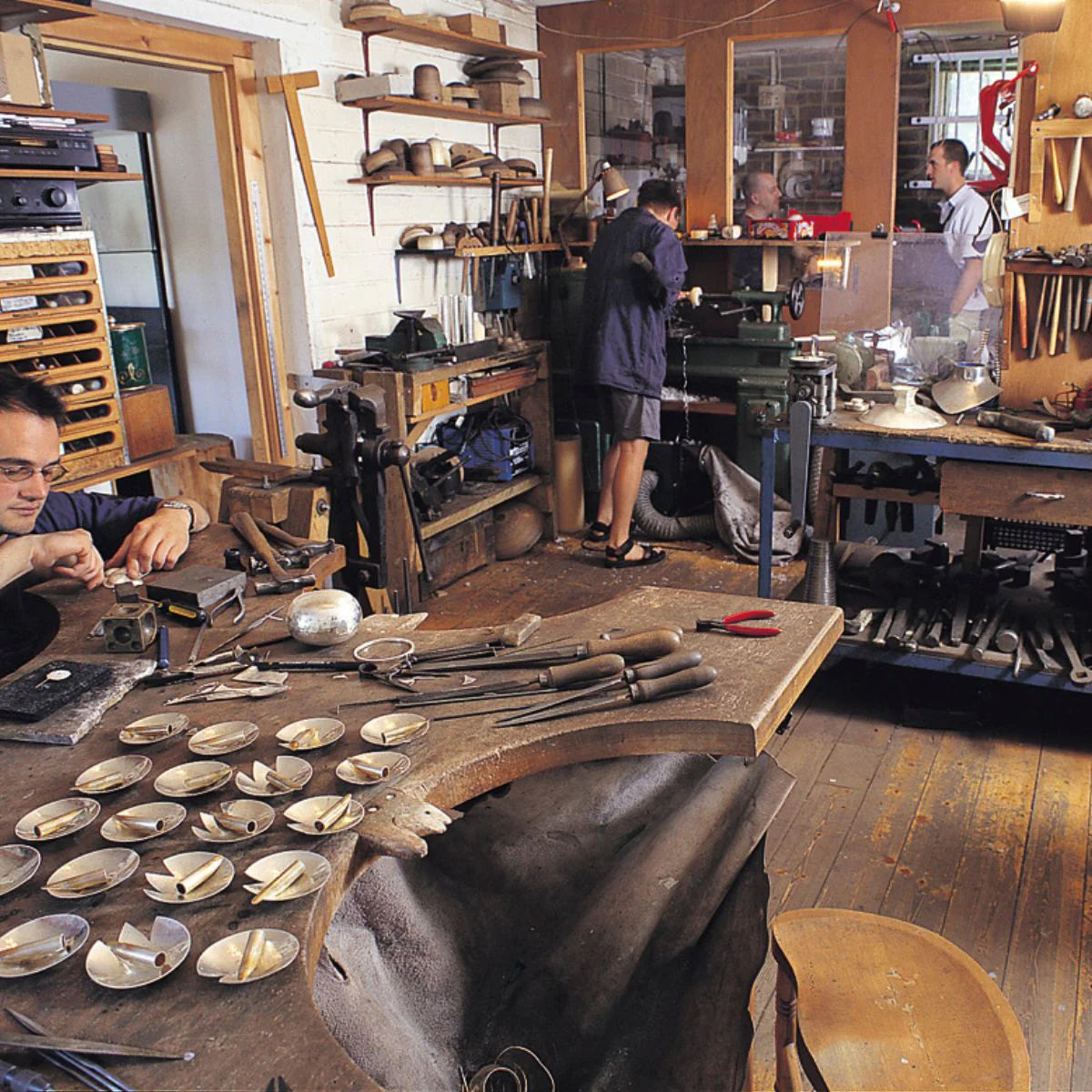
1988 · Establishment
Anton and Rebecca opened their first workshop at the Turner Dumbrell workshops in Ditchling — traditional craft, contemporary design — and quickly earned a reputation for their skill.

1990 · A significant commission
Three 2-litre silver jugs and a chalice, each hand-chased with a vine-leaf motif.
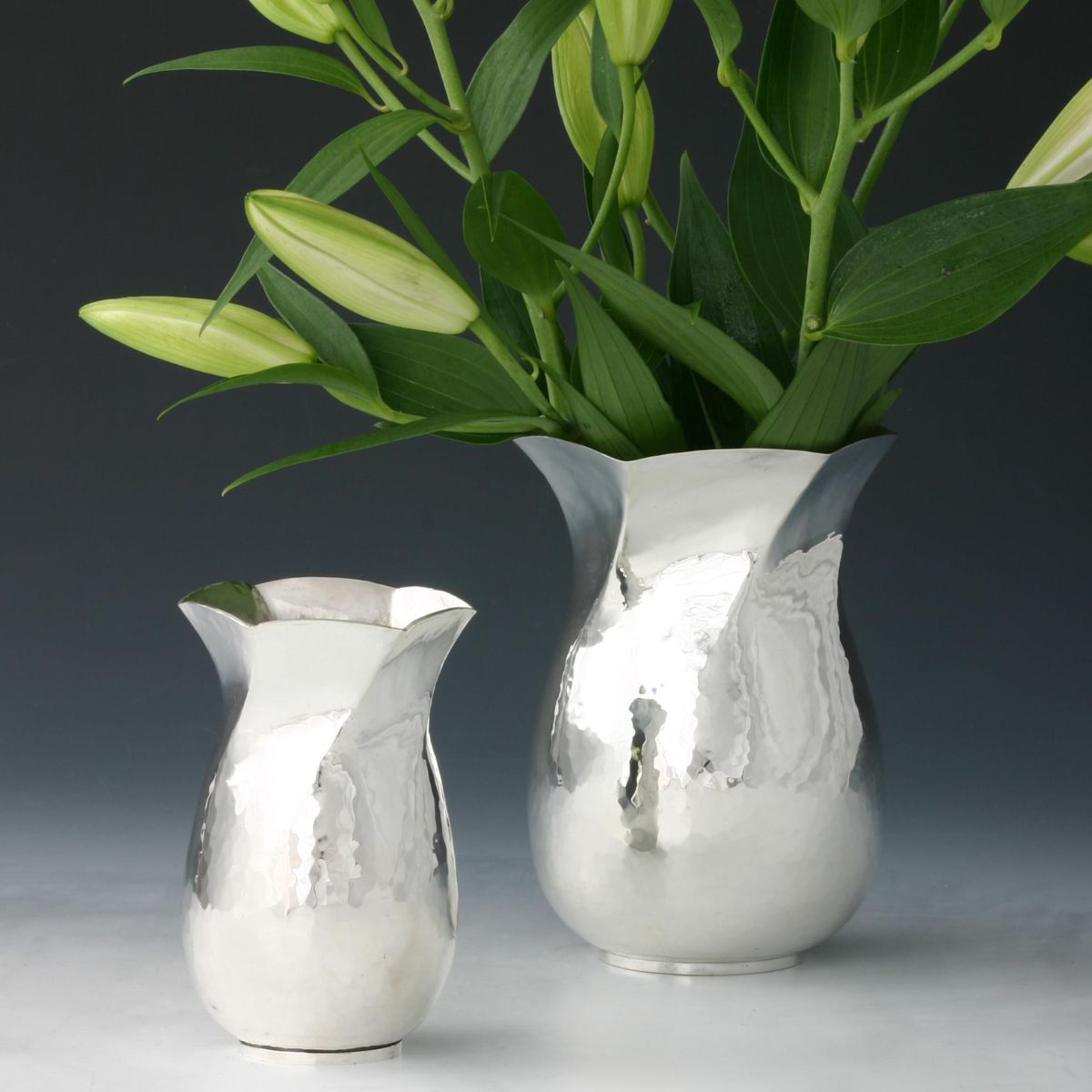
1994 · International recognition
Rebecca’s silverware sold through Mappin & Webb and showed in galleries across America and Japan. With the Crafts Council, the studio exhibited in San Francisco, New York and London, and at Goldsmiths’ Fair.
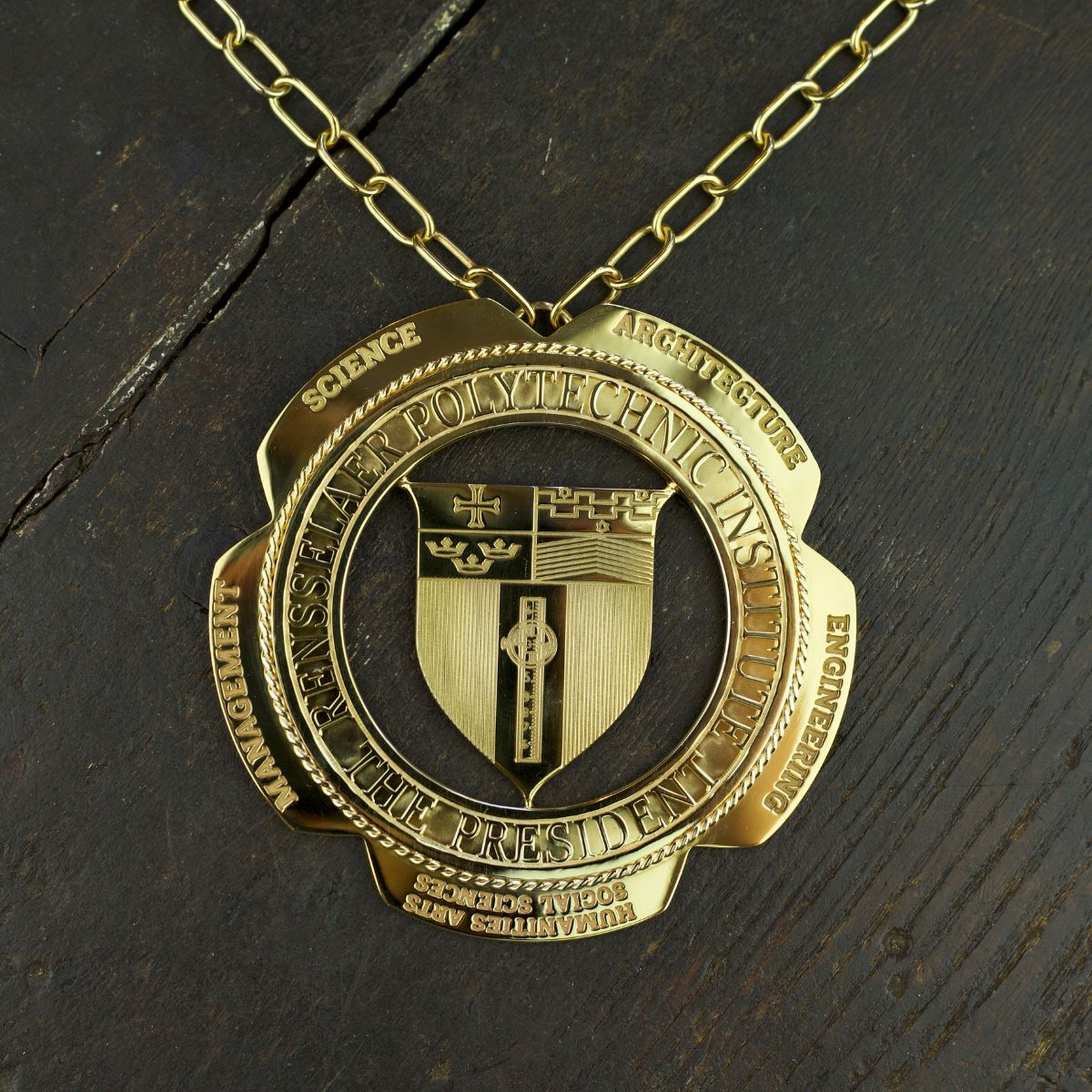
1995 · A prestigious commission
The Mace and Chain of Office for the incoming president of Rensselaer Polytechnic Institute, New York.
A new millennium, a new direction: a silversmith’s skills, turned to jewellery.
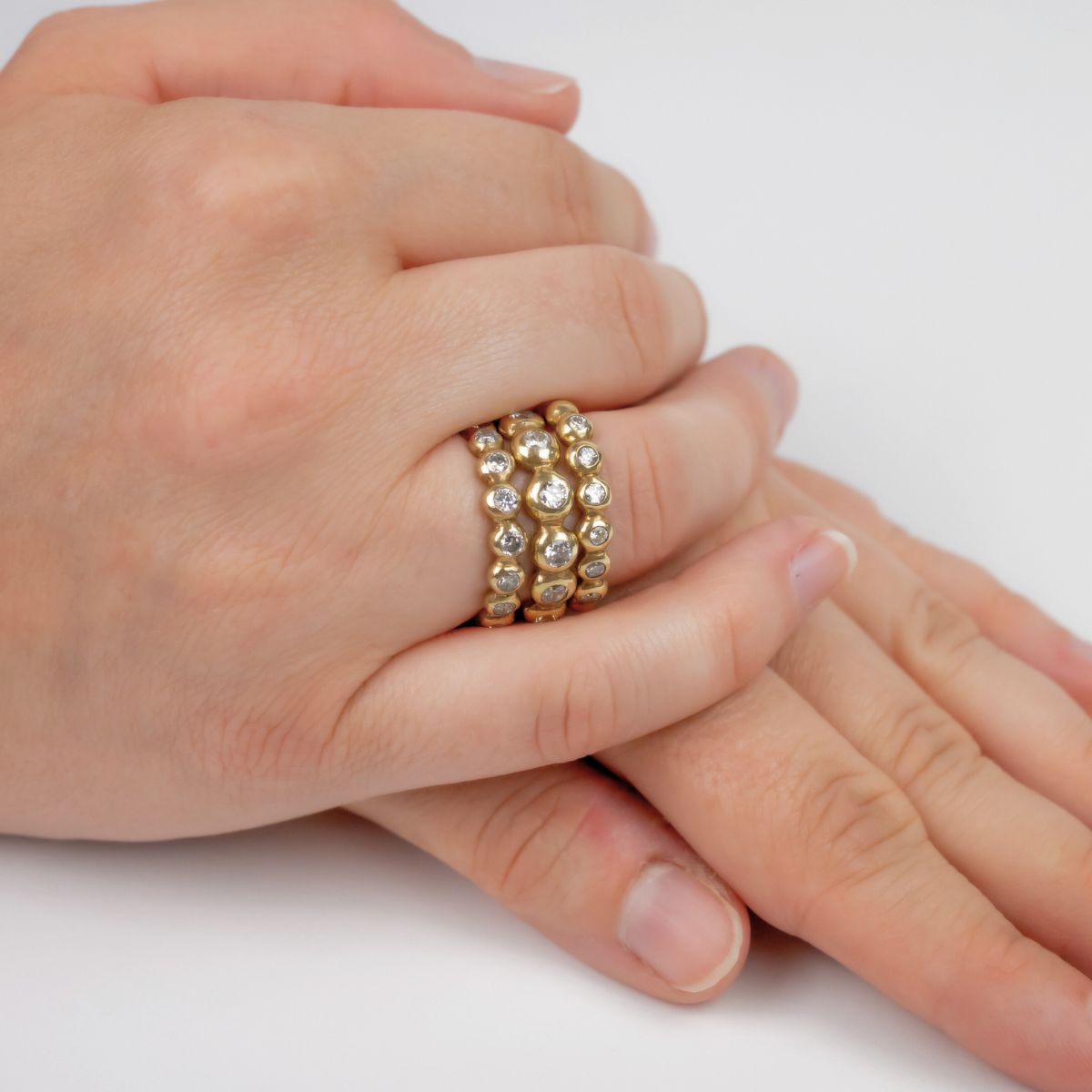
1999 · A shift to jewellery
Anton and Rebecca turned their silversmithing to jewellery — the organic, textured designs we’re still known for.
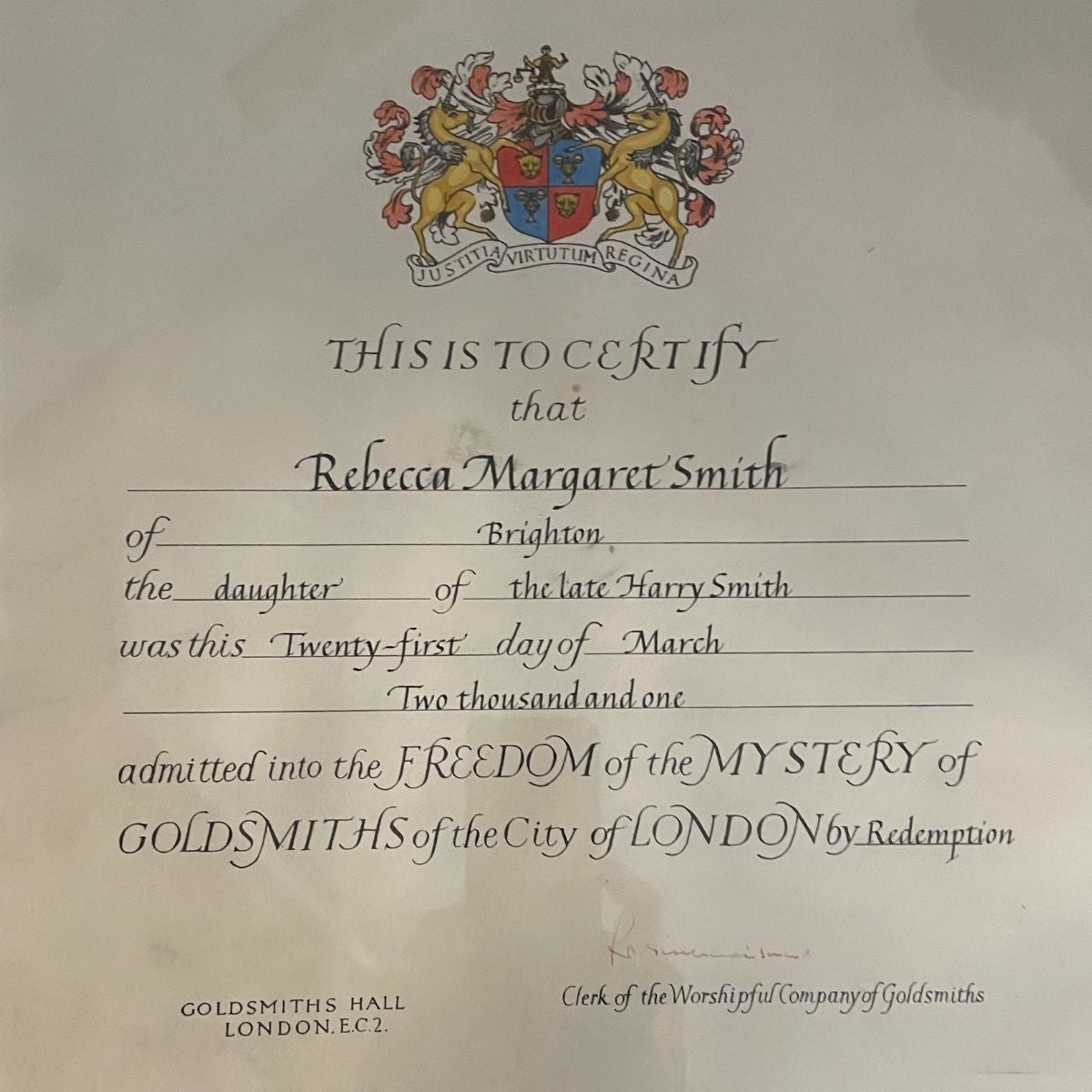
2001 · Honoured
Rebecca and Anton were admitted to the Freedom of the Worshipful Company of Goldsmiths.
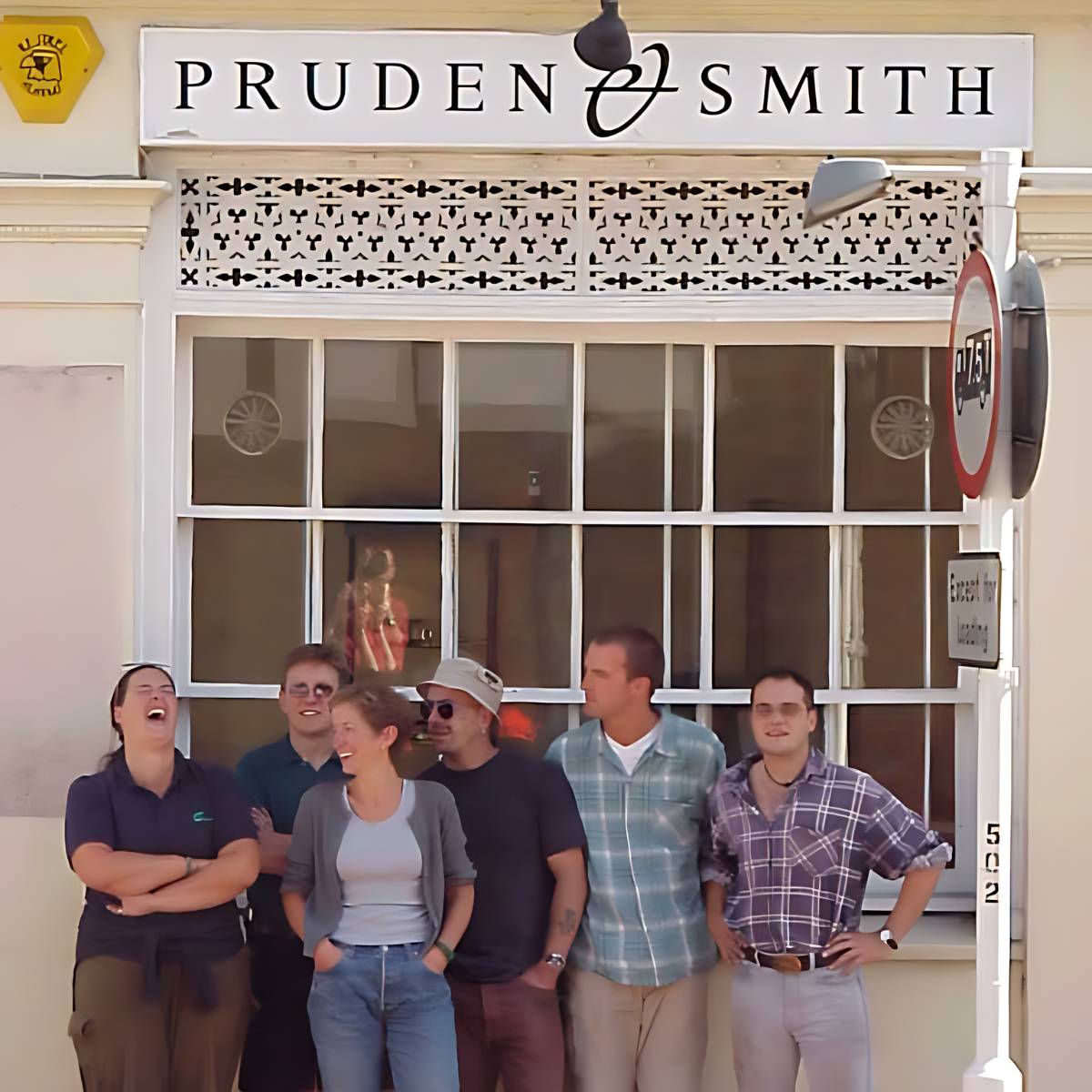
2002 · A new home
Our gallery and workshop moved to the heart of the village, into the old Ditchling Press building — the same press that published Dunstan’s book, almost seventy years earlier.

2007 · A significant commission
Rebecca designed chalices and ciboria for Francis Pollen’s round church at Worth Abbey, alongside furniture by Thomas Heatherwick.
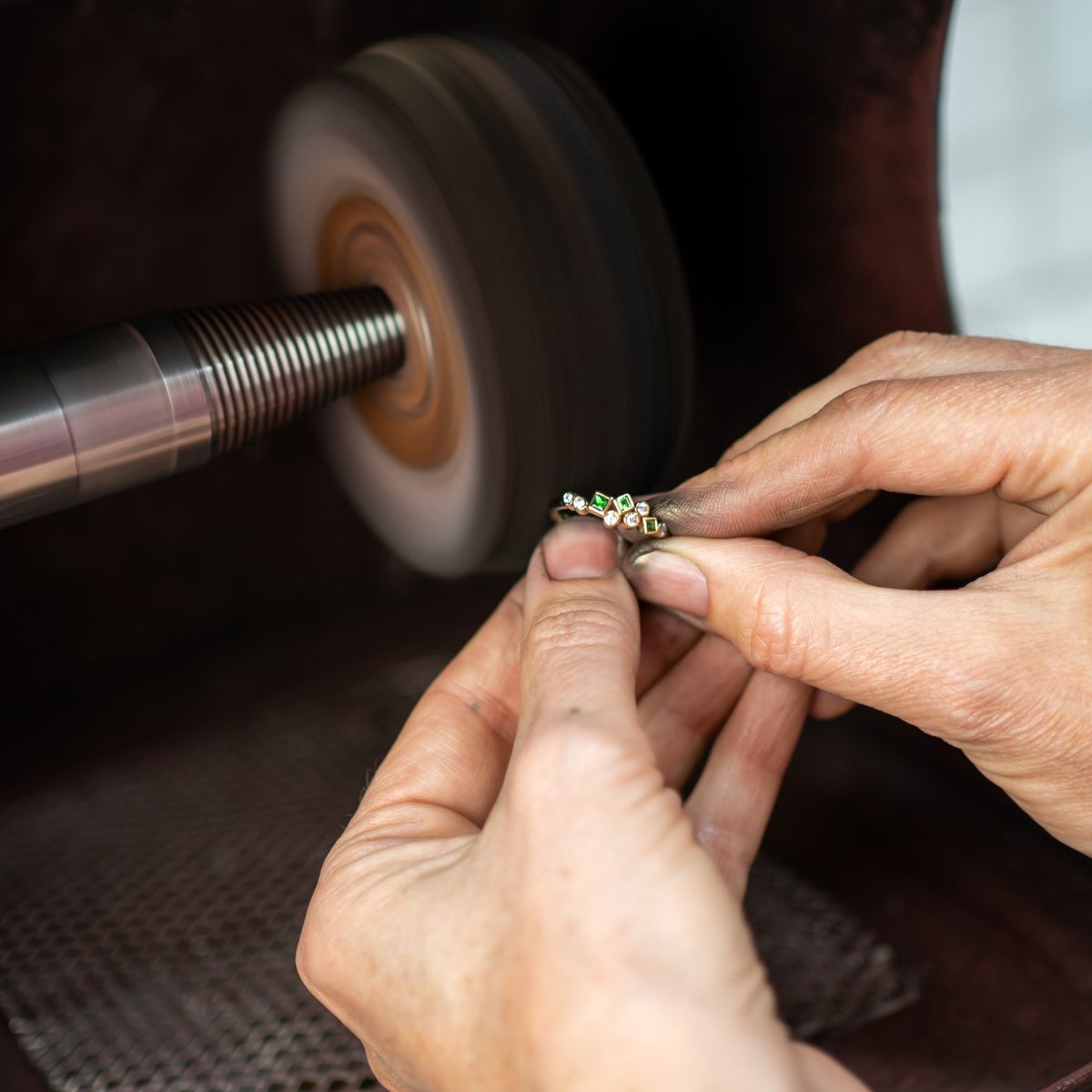
2009 · Digital presence
Our jewellery went online for the first time, alongside a growing bespoke service.
A head goldsmith, a growing team and a bigger Victorian workshop. Same village, same bench.
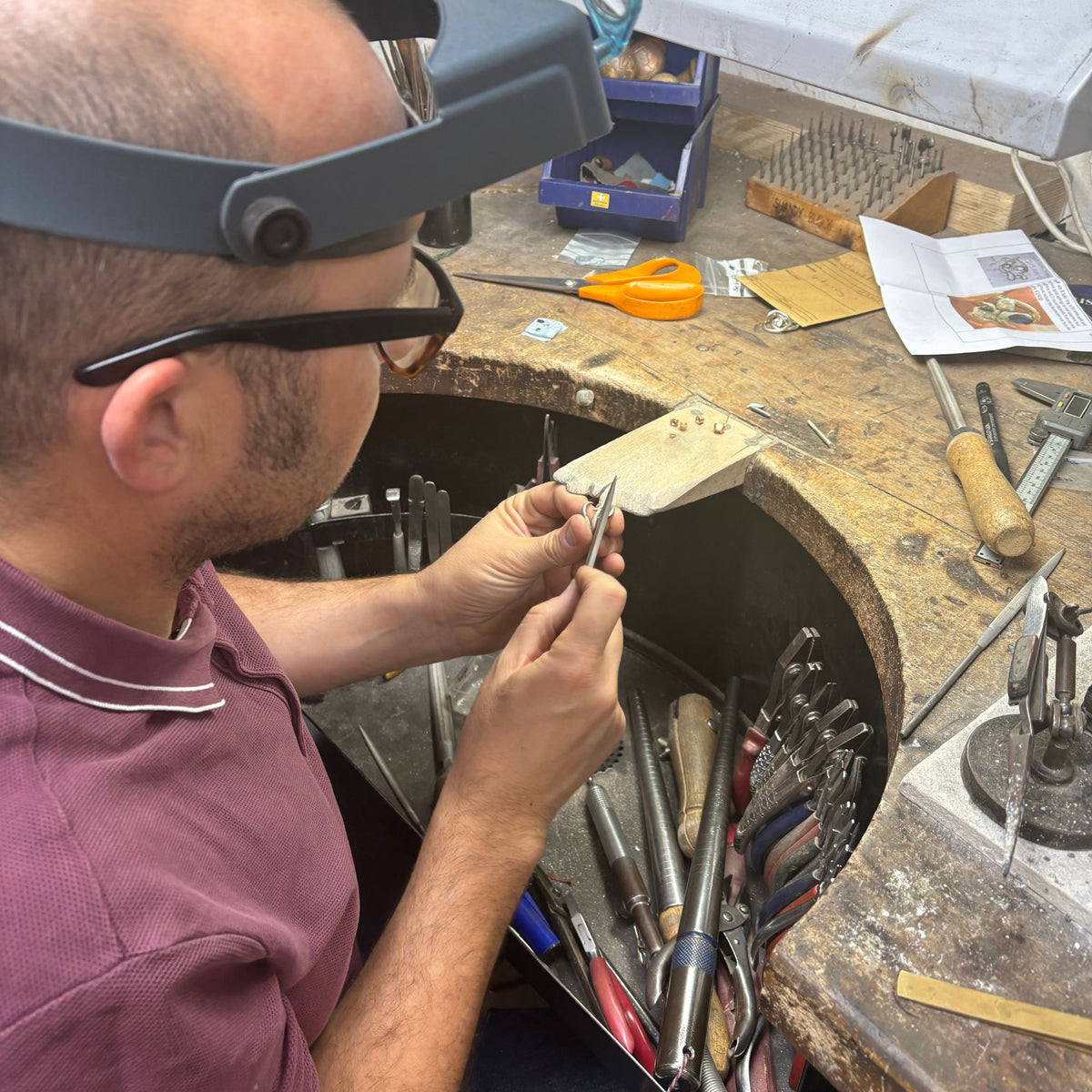
2010 · Team expansion
Working alongside Rebecca, Simon helped grow our fine jewellery collections.

2017 · Recognition
Winners of the Muddy Stilettos Award.
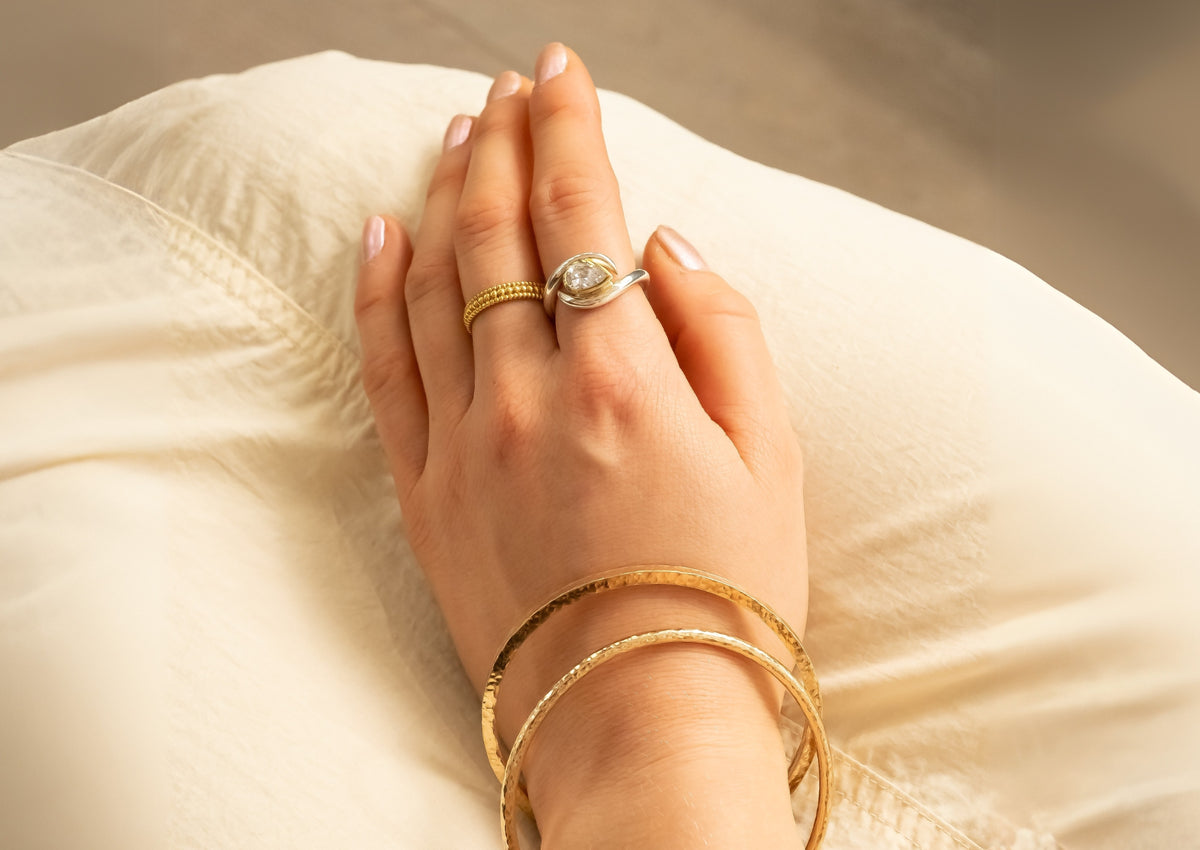
2024 · Expansion
We expanded our Ditchling store and Victorian workshop, and grew the team to meet demand.
Chapter V · Yours
Every commission joins this story. Visit the workshop in Ditchling, or begin a bespoke piece with the people who make it.

Discover the artistic heritage of Ditchling, a village rich in craft, culture, and scenic beauty. Visit our workshop and explore this timeless corner of the South Downs.

See how we blend traditional techniques with innovative design to craft unique jewellery.

Discover how we champion ethical craftsmanship, sustainability, and women-led leadership at Pruden & Smith.