01 · Tradition
A tradition, passed hand to hand
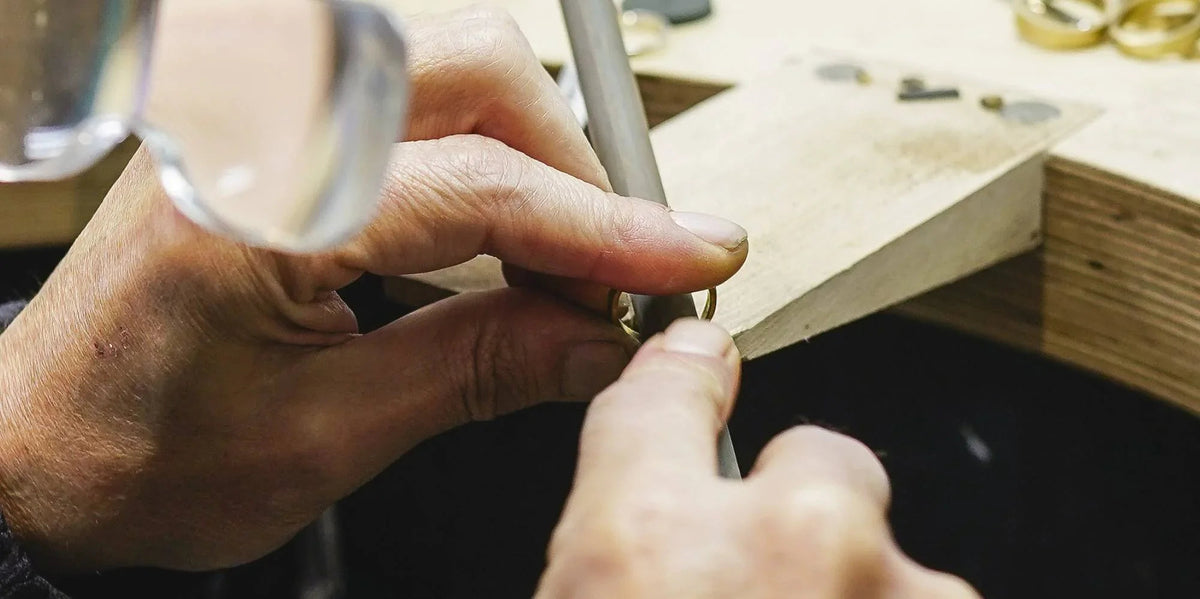
Craftsmanship isn’t just technique. It’s knowledge, built over centuries and passed from one maker to the next.
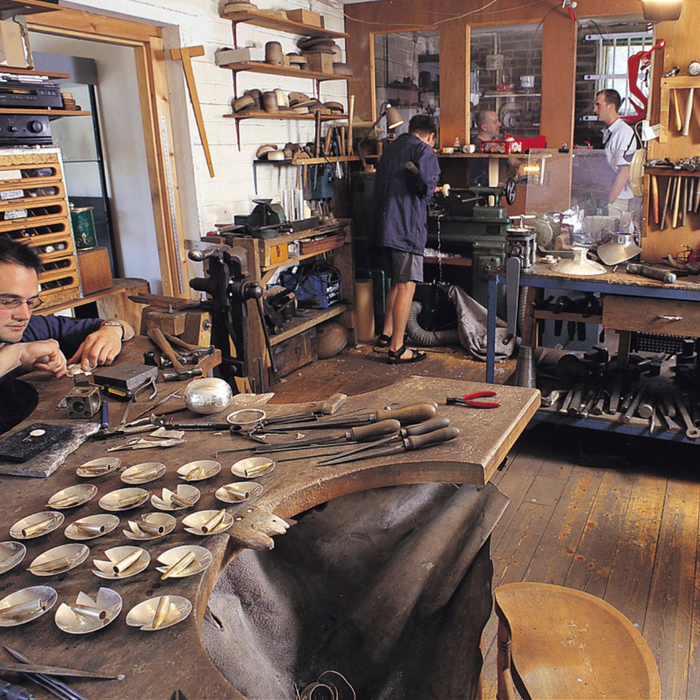
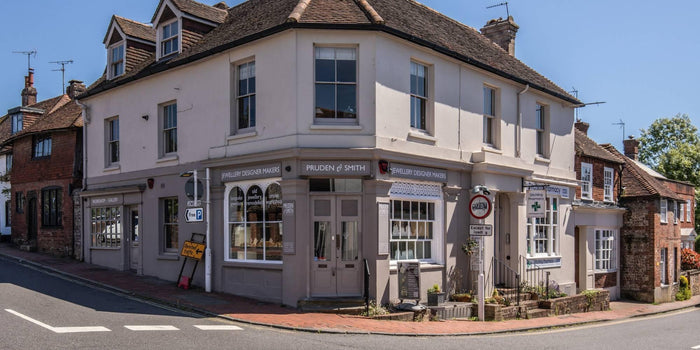
British goldsmithing is rooted in discipline, patience and an intimate understanding of metal. Our own story traces back to Dunstan Pruden, where these techniques were learned, practised and preserved.

Head Goldsmith
Simon Alexander
Decades at the bench. His hands know when a curve is right, when a setting is secure, when a piece will last. That knowledge can’t be rushed.
02 · Technique
The language of the hammer
Many of our designs carry textures made with the hammer. From planishing to peening, each one leaves its own mark.

Subtle ripples, rugged surfaces, organic finishes: each piece carries the rhythm of the hand that made it. You’ll see it across our designs.
Some of the hammers in our workshop once belonged to Dunstan Pruden. They are nearly a hundred years old, and still in use.
The tools carry history. The marks carry meaning.
03 · Technology
Modern tools, used well
We’re not stuck in the past. These tools don’t replace craftsmanship; they let it go further, more accurately and more safely.
Laser welders
Precision repairs and delicate joins.
Microscopes
Inspecting old gemstones and fine settings.
Modern torches & motors
More control and consistency at the bench.
04 · Making
Cast or fully handmade
There’s more than one way to make a piece of jewellery. Both end the same way: in skilled hands, at our bench.
Cast
- Our CAD team turns the design into a precise digital model
- The model is printed and cast in metal
- Back at our bench it’s filed, shaped, set and polished by hand
Fully handmade
- Precious metal is melted down and cleaned
- Rolled and drawn by hand into workable stock
- Hammered, formed, soldered, set and finished, entirely by hand
A rare skill
Melting down precious metal and working it by hand is a skill many goldsmiths have lost. It’s why we can offer true remodelling: your own gold, reworked rather than replaced. See how
05 · Remodelling
Your gold, remade
A grandmother’s ring, a necklace worn for decades. We don’t swap your metal for new; we rework the gold itself.
Melt & clean
Your gold is melted and refined back to its raw state.
Rolling mill
Flattened and shaped into workable stock.
Draw bench
Pulled into precise wire, strengthened with every draw.
New form
Made into a new ring, setting or structure.
It’s slow, specialist work, and for many workshops it’s easier to start again with new metal. We believe something important is lost when that continuity is broken. The material changes shape; the meaning stays.
See it for yourself
Visit the workshop in Ditchling
Watch gold being formed, stones being set and textures taking shape, and join one of our workshop tours.